Obscure Books
Drama of the European Jews by Paul Rassinier
Drama of the European Jews by Paul Rassinier
Couldn't load pickup availability
Drama of the European Jews
This is a REPRINT of an exceedingly difficult book to find.
Please allow two weeks for the book to be delivered.
Note: This book is a reproduction of the historical text for academic, historical, or collector purposes.
1975 English translation printed in 2026.
6" x 9" / 131 pages
Book description
The book primarily focuses on criticizing evidence, testimony, and statistical estimates used during the Nuremberg Trials and in postwar historical research. Rassinier argues that many wartime documents, witness statements, and death estimates were inconsistent, exaggerated, forged, or based on unreliable testimony. He closely examines testimony concerning extermination camps such as Auschwitz, Treblinka, Sobibor, Belzec, Chelmno, and Majdanek, often comparing conflicting figures from different historians, commissions, and witnesses.
A recurring theme is skepticism toward the methods used to estimate Jewish deaths during the Holocaust. The author questions how different researchers arrived at totals ranging from several hundred thousand to several million deaths and argues that these calculations relied heavily on conjecture rather than verifiable records.
The work also critiques specific documents and testimonies introduced at Nuremberg, including the Gerstein Report and accounts by former prisoners and officials. Rassinier claims that some evidence was contradictory or improperly authenticated and suggests that prosecutors and historians selectively used sources that supported predetermined conclusions.
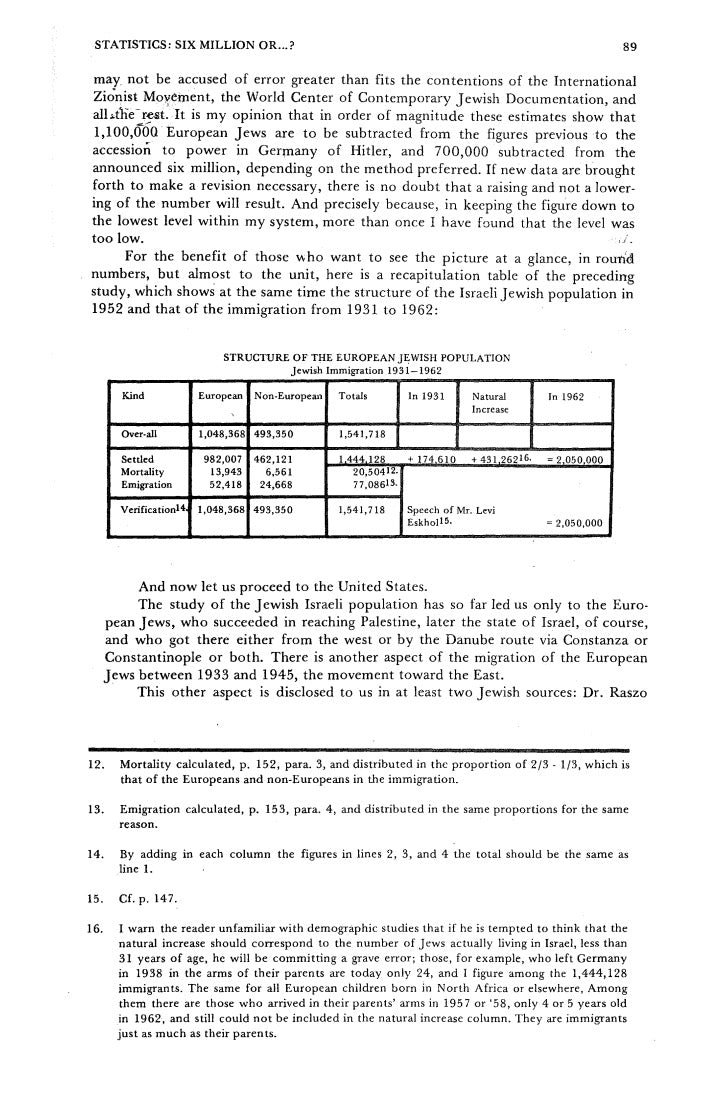
Immigration and population displacement are also discussed in the context of postwar Jewish population estimates. The author references arguments made during the Nuremberg Trials that some missing Jews may have emigrated or been displaced across Europe and other regions after the war, rather than all having died in extermination programs.
Share