The Geography of the Peace
This reproduction is a labor of love. I have combined the best parts of two versions of the book to reconstruct it. The formatting is not perfect, but it is completely readable. Please look at the pictures.
Please allow two weeks for the book to be delivered.
Note: This book is a reproduction of the historical text for academic, historical, or collector purposes.
Originally published in 1944; printed in 2026.
6" x 9" / 79 pages
Book description
The Geography of the Peace is a foundational 1944 geopolitical book by Dutch-American scholar Nicholas J. Spykman. It argues that geography is the most permanent factor in foreign policy and that U.S. security directly depends on maintaining a balance of power across Eurasia.
Spykman rejected isolationism, asserting that control of the Eurasian coastal "Rimland" is the true key to global dominance.
Key Concepts from The Geography of the Peace:
The Rimland Theory: Spykman famously inverted Halford Mackinder’s "Heartland" theory. Instead of the resource-isolated, landlocked interior of Eurasia, Spykman argued that the Rimland—the peripheral crescent of coastal Europe, the Middle East, and Asia—holds the majority of the world's population and industrial resources.
The Maxim: His geopolitical thesis is summarized as: "Who controls the rimland rules Eurasia; who rules Eurasia controls the destinies of the world."
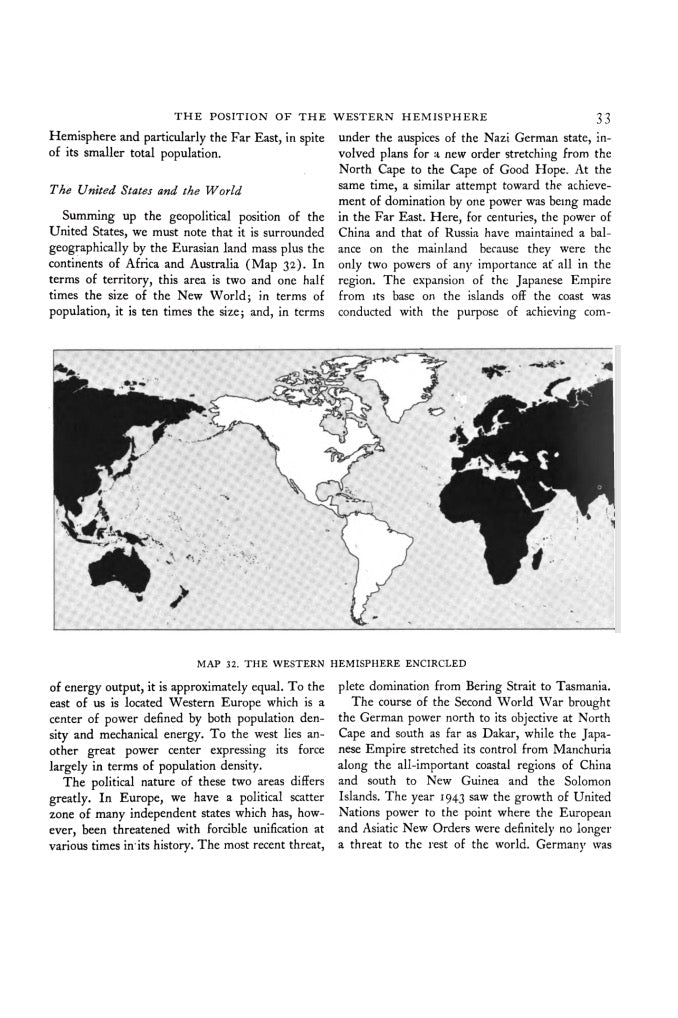
Critique of Hemispheric Defense: Spykman warned that relying solely on the Atlantic and Pacific oceans for U.S. security is a "dangerous illusion." He argued that a hostile power dominating the Eurasian coastline would inevitably project force into the Americas.
The Asiatic Mediterranean: Spykman viewed the East Asian littoral as a critical geopolitical zone heavily reliant on sea power and prone to power vacuums, necessitating continuous U.S. engagement to prevent a single dominant regional hegemon.