Vita Patrum (the life of the Fathers)
This is a REPRINT of an exceedingly difficult book to find.
Please note the pages are slight gray except for a white border. (See pictures.) The text is still 100% readable.
Please allow two weeks for the book to be delivered.
Note: This book is a reproduction of the historical text for academic, historical, or collector purposes.
1988 edition printed in 2026.
6" x 9" / 336 pages
Book description
A major work of Orthodox hagiography from the 6th century by a great Orthodox Saint of the West. Never before translated into Greek, Russian, or English, it is here presented and dedicated to the Blessed Memory of Archbishop John Maximovitch, himself the most recent of the great Orthodox Hierarchs of Gaul and new Apostle to the lands of the West.
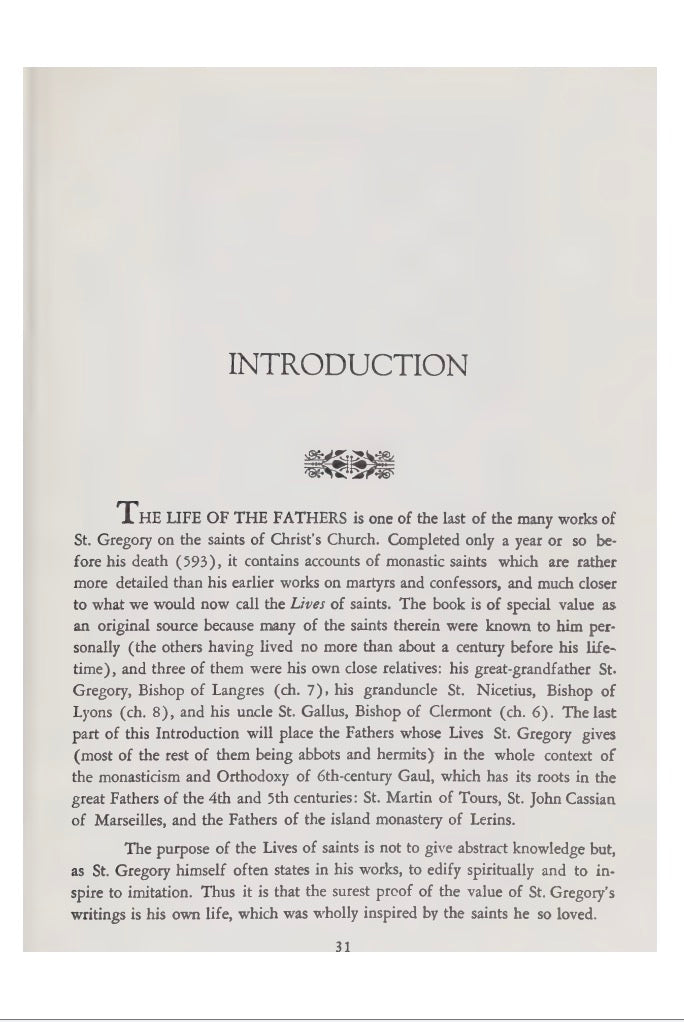
No writer in the Orthodox Christian West was more devoted to the Saints of Christ's Church nor more prolific in their praises than St. Gregory, Bishop of Tours (539-594). Although he is chiefly known today for his History of the Franks, he is more important to Orthodox Christians for his eight Books of Mira- cles. The seventh of these he dedicated to the ascetic strugglers of his native Gaul (France), many of whom he knew personally and some of whom were his close relatives. This book he called Vita Patrum or The Life of the Fathers, as if the many Saints described therein led one life before God. A hagiographical clas- sic, Vita Patrum ranks with the Lausiac History and the other great a basic source-book of Orthodox Christian spirituality.
Vita Patrum was presented for the first time in the English language through the efforts of the late Fr. Seraphim Rose, who devoted his life to making such vital source-books available to the modern reader. Fr. Seraphim's introductory essays not only provide fascinating historical background, illuminating various aspects of Orthodox Christianity and monasticism in 5th and 6th-century Gaul, but they also indicate how we can apply the tried-and-tested spiritual knowledge of the ancient Gallic ascetics to our daily lives in the modern world.